How Gridman is put together
Five entities and the links between them: everything else in the app hangs off that chain.
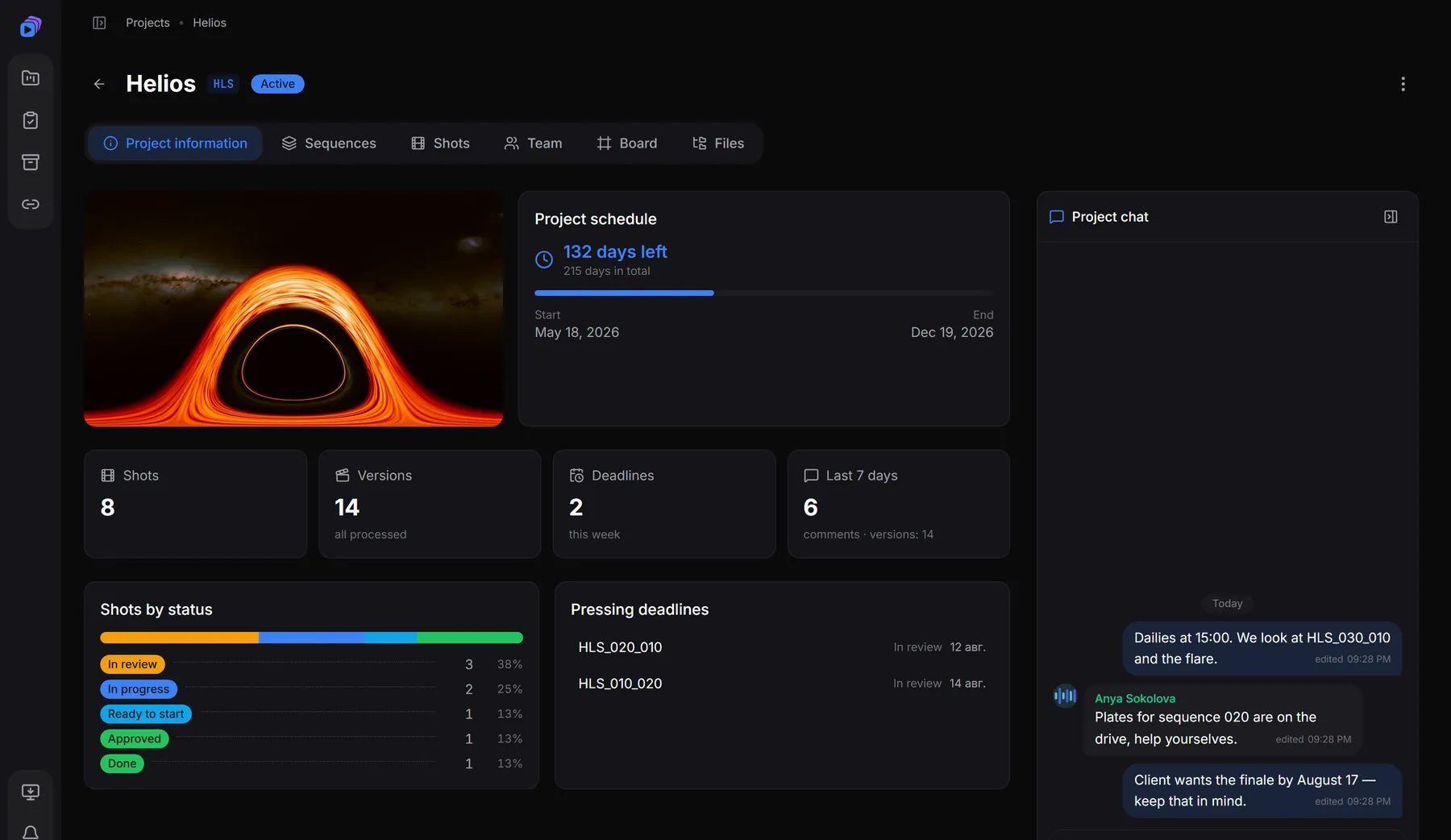
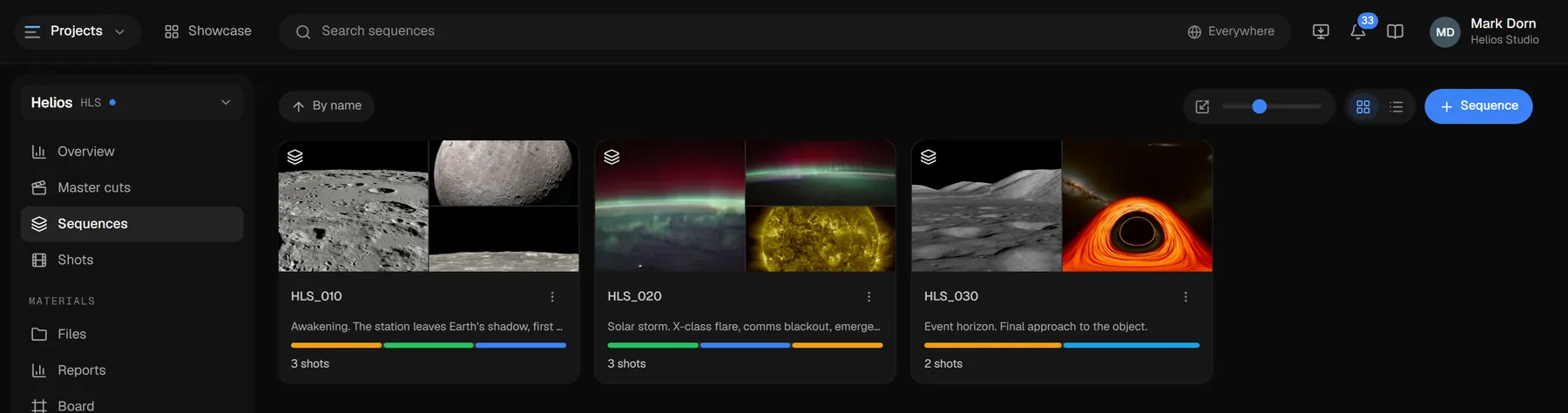
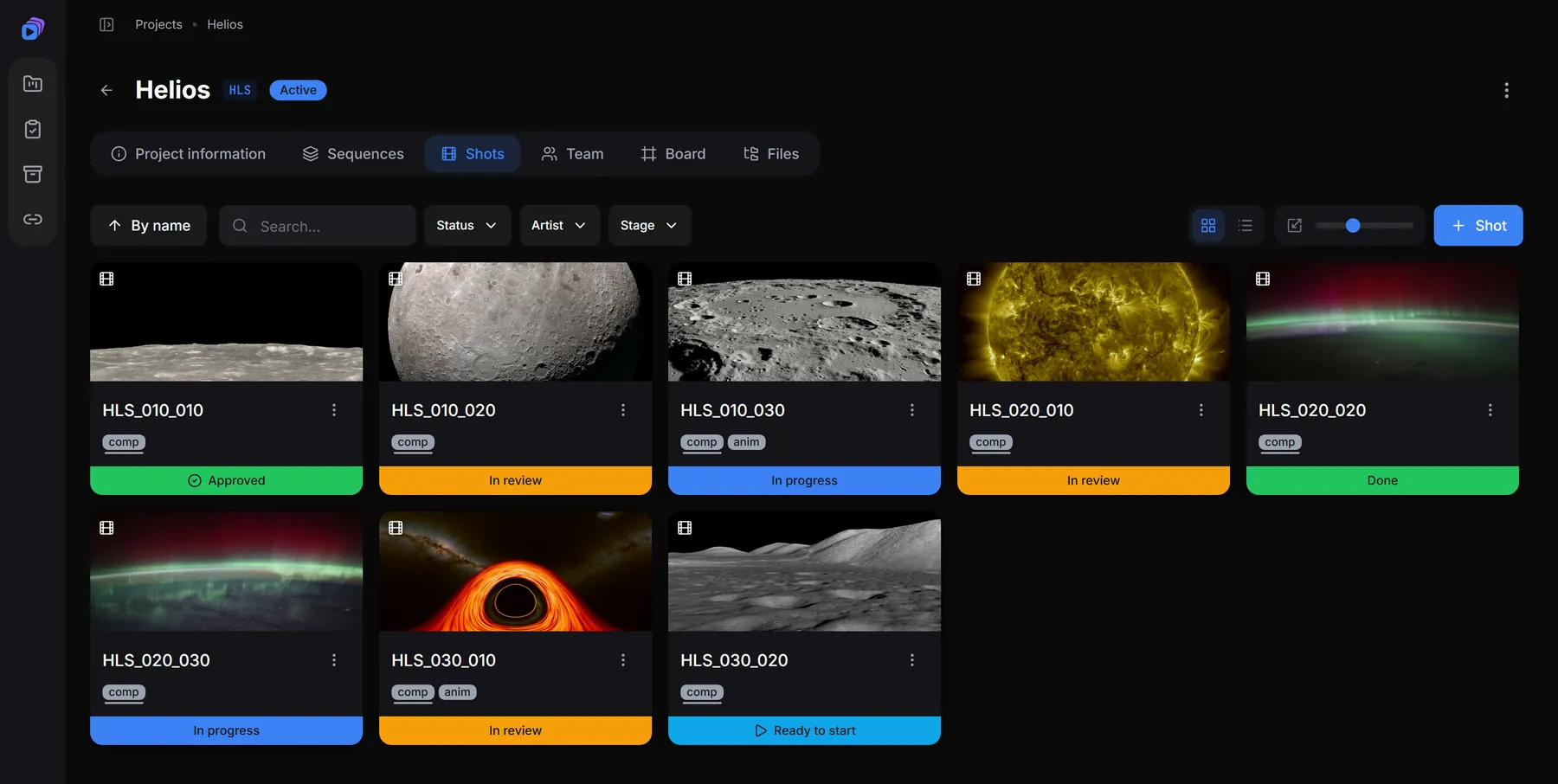
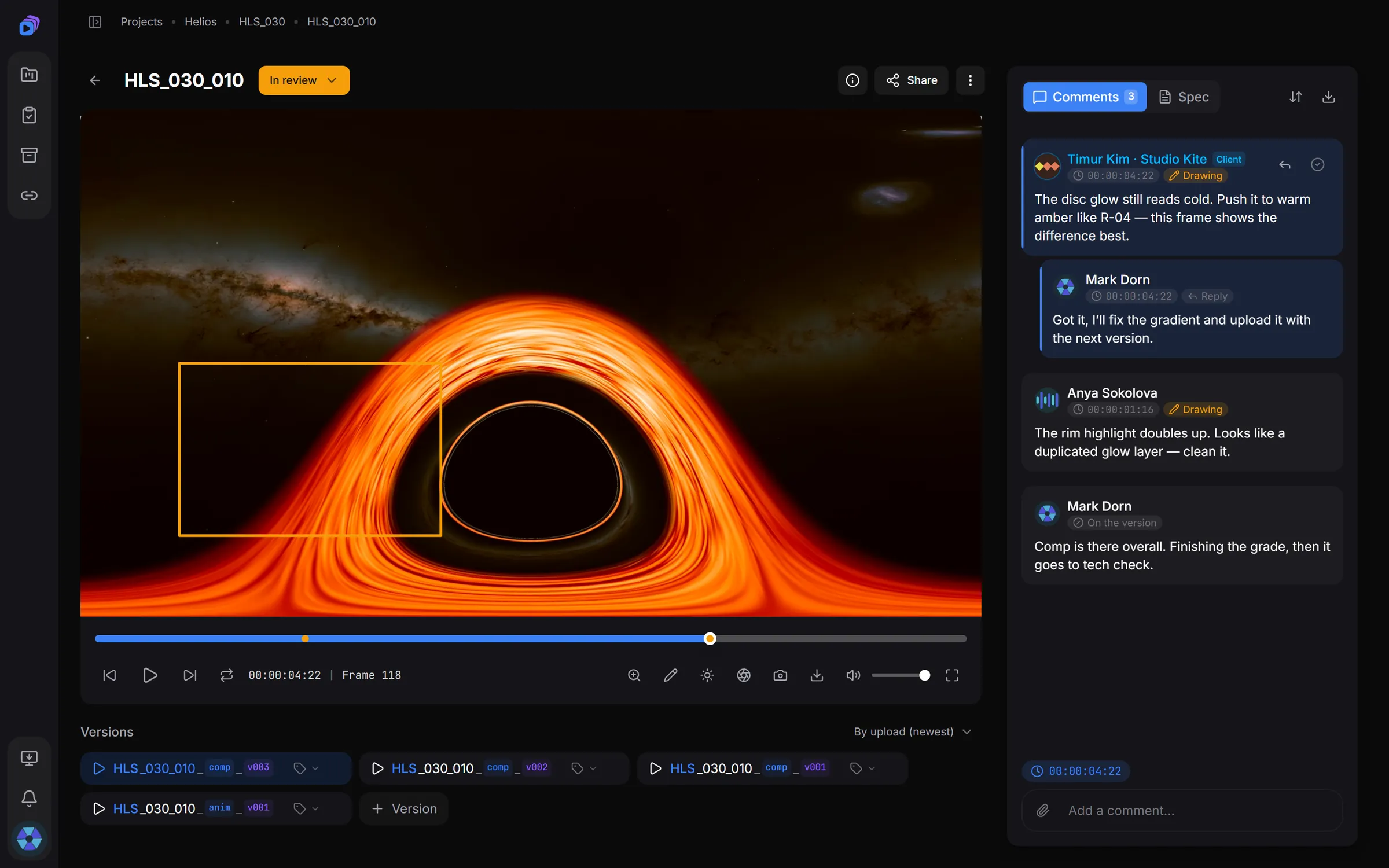
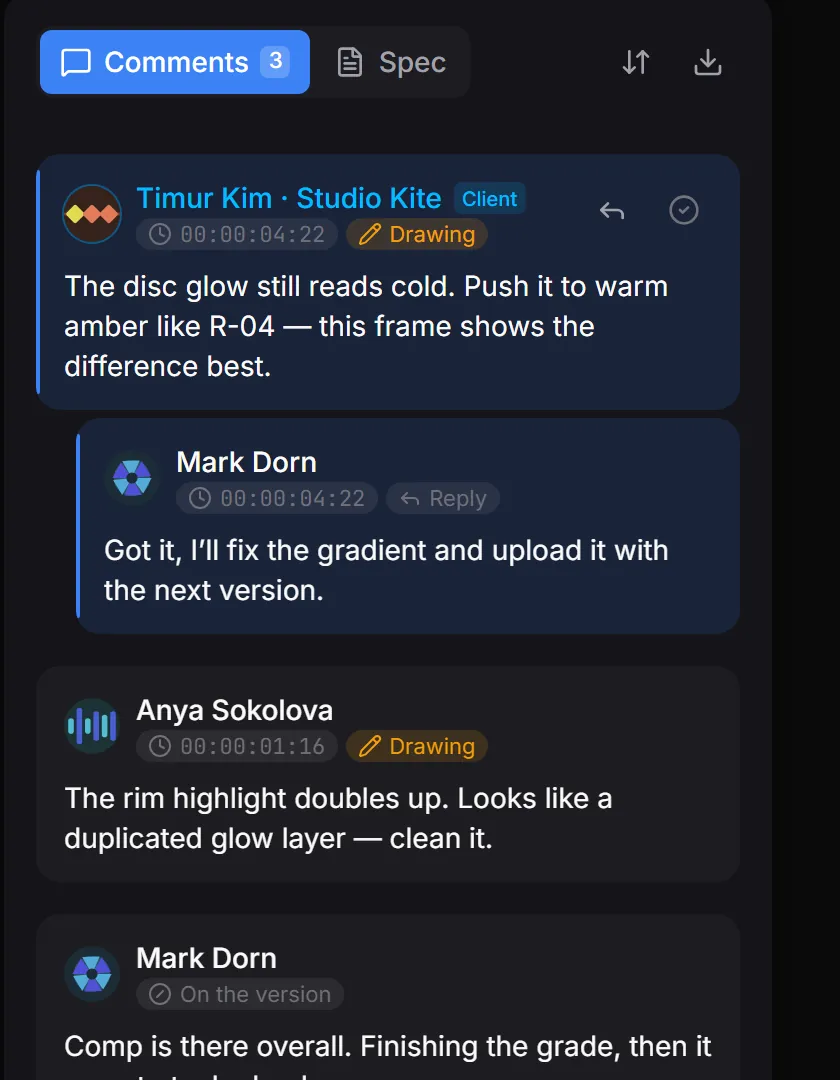
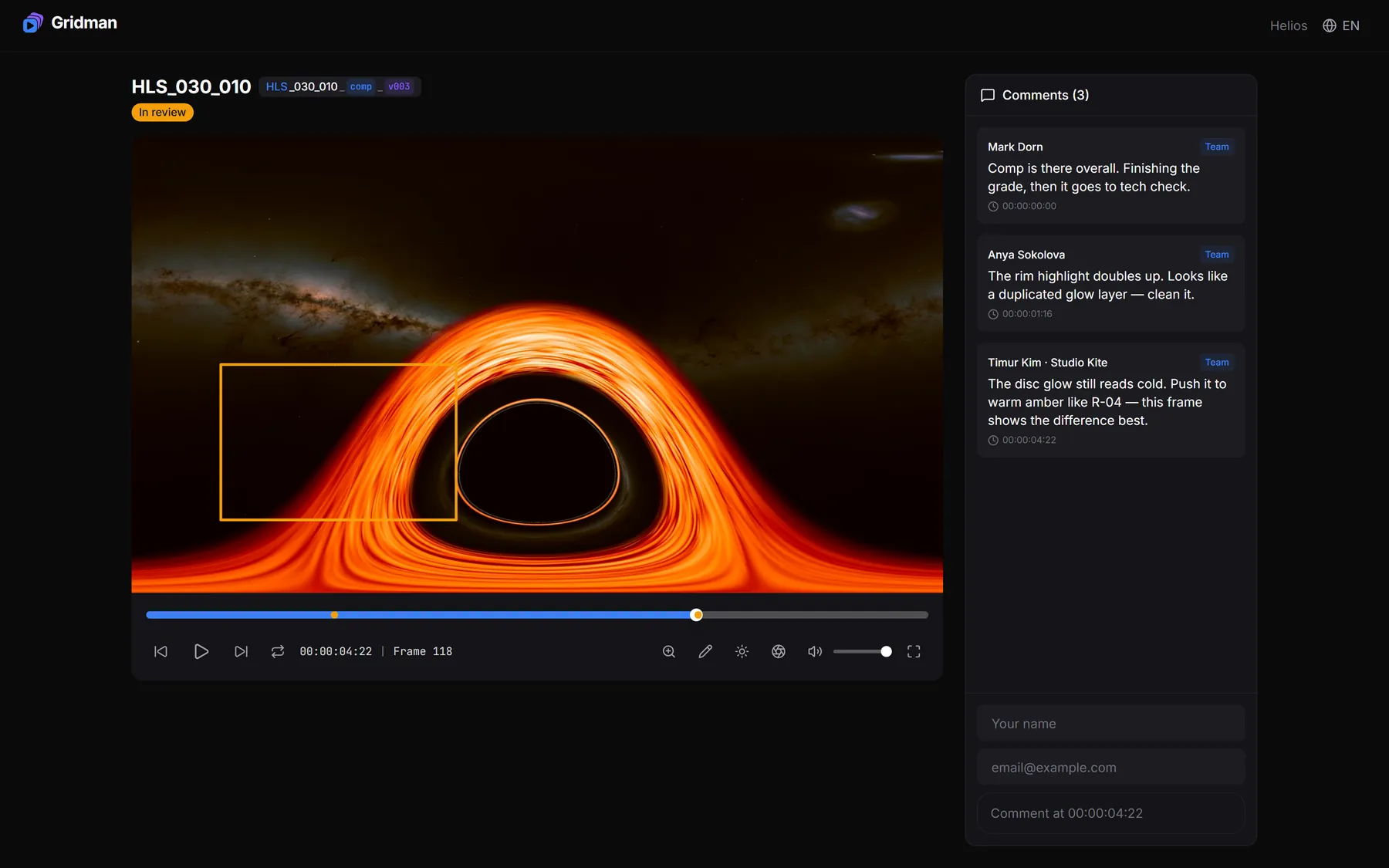
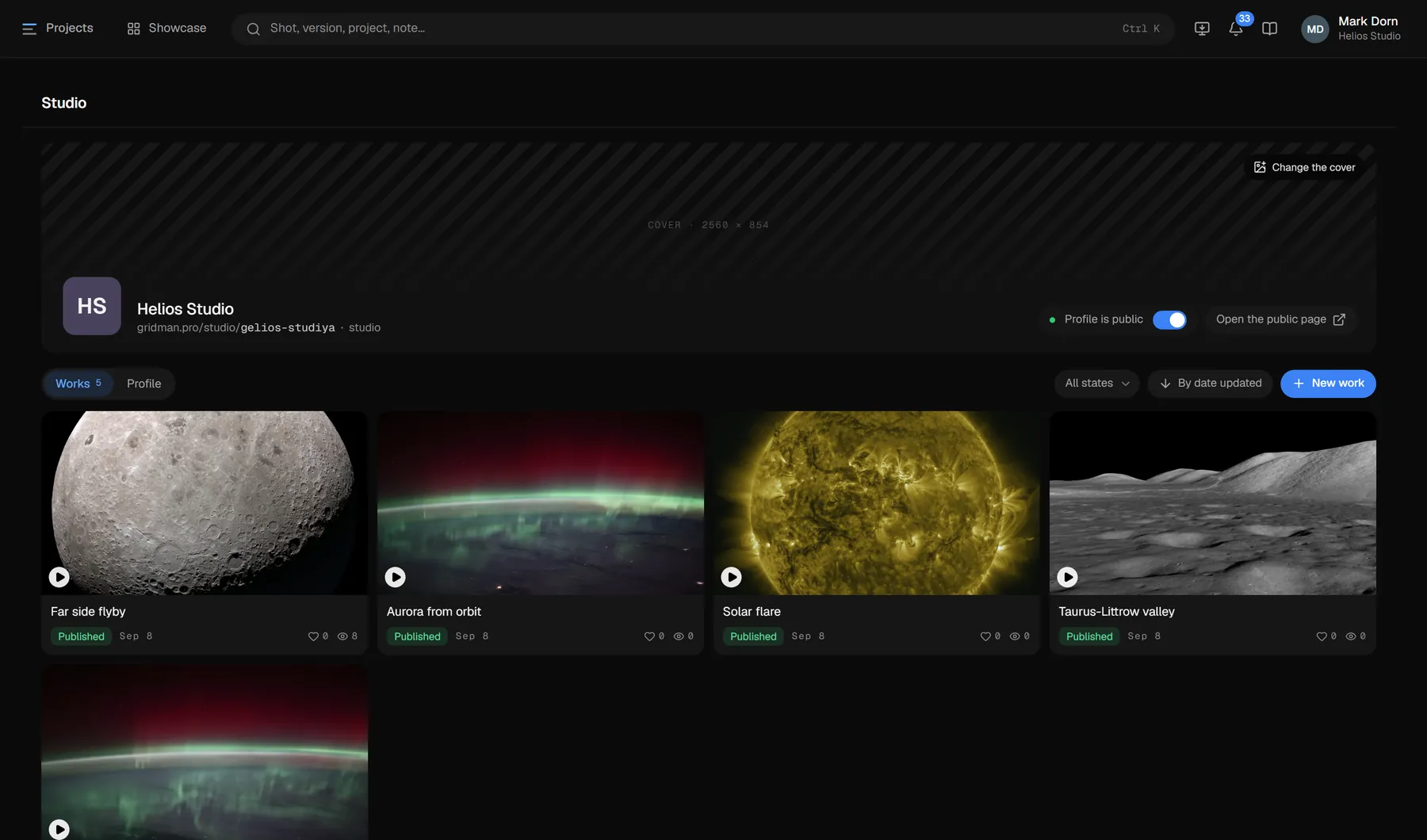
Gridman rests on a single chain: project → sequence → shot → version → comment. A project is a film, a commercial or a series. A sequence is a scene inside it. A shot is a single plate somebody owns and that has a due date. A version is the actual file brought in for review. A comment is a note pinned to a frame of that version.
- ProjectA film, a spot, a series. Code, dates, team
- SequenceA scene inside the project. Optional
- ShotA plate: due date, artists, status, brief
- VersionAn uploaded file: stage and number
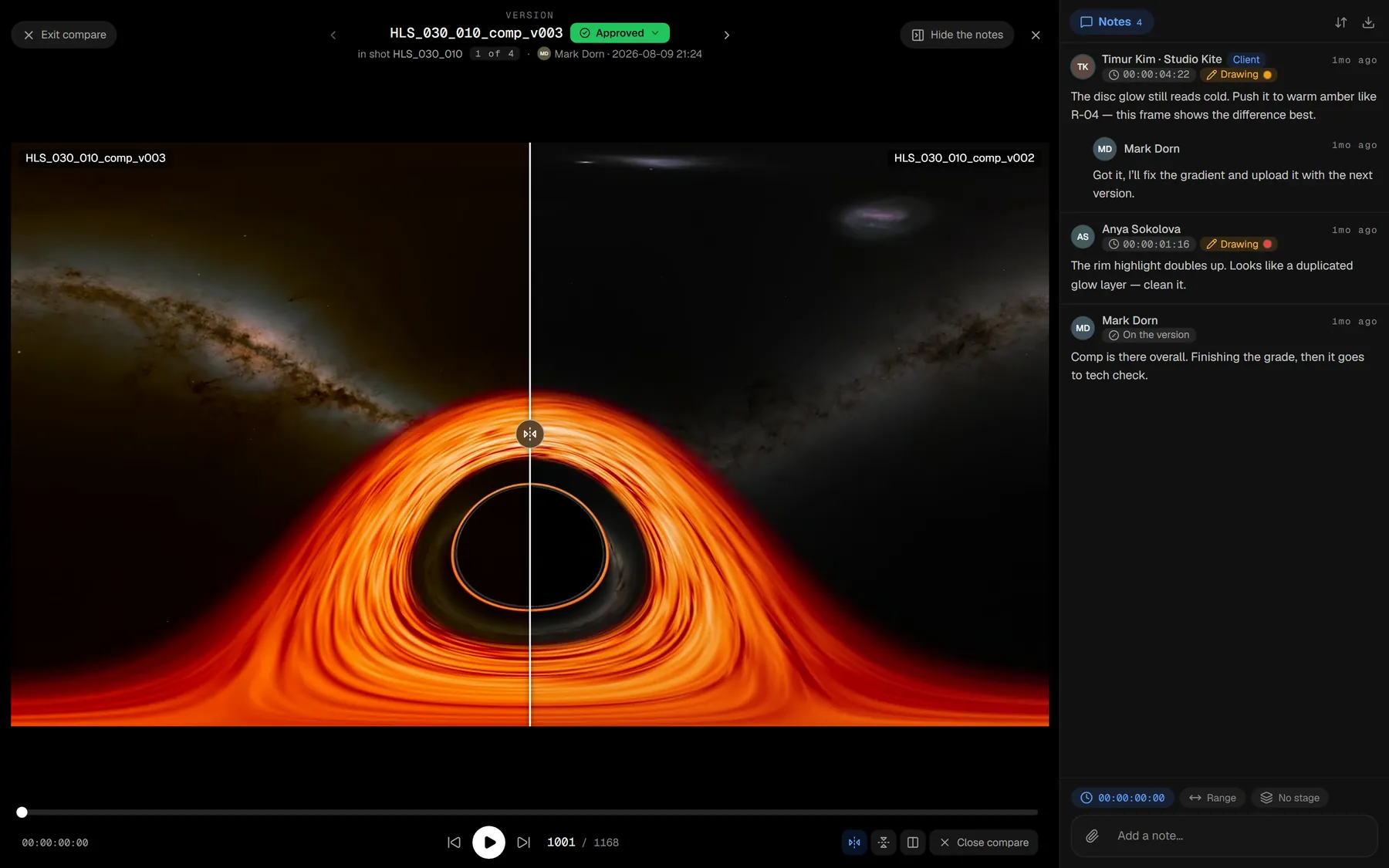
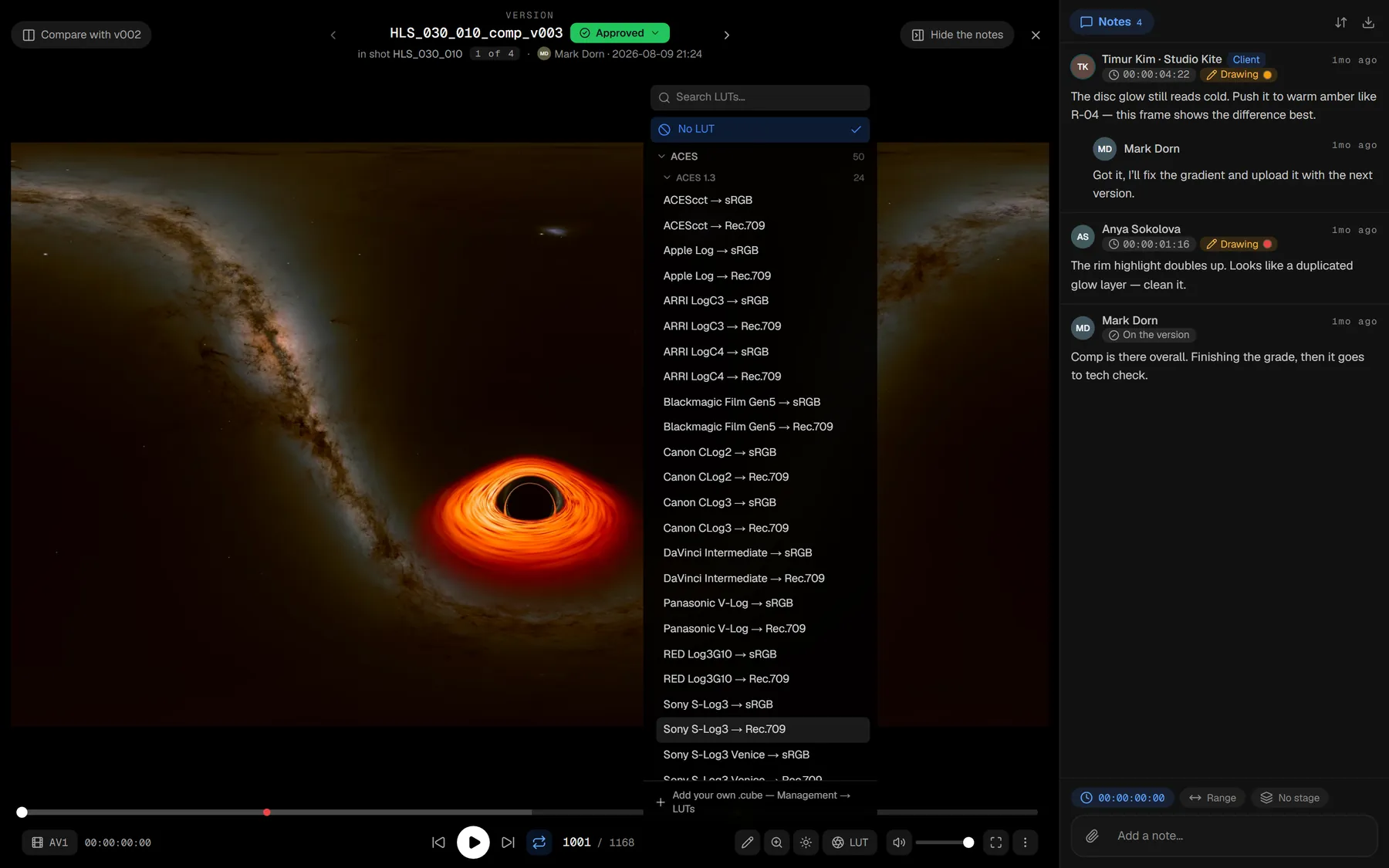
- NoteA remark on one frame of the version
- ProjectA film, a spot, a series. Code, dates, team
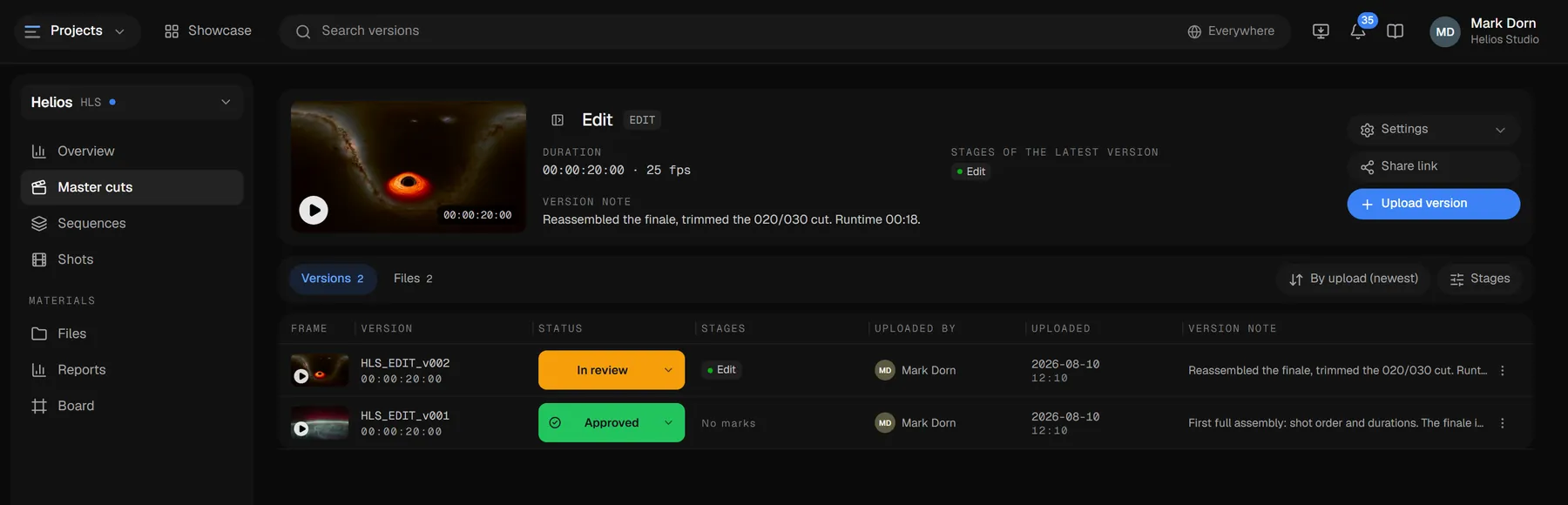
- MasterEdit, colour, sound. A name and a code
- Master versionThe whole cut: its own status, no stage or verdict
- NoteA remark on one frame of the version
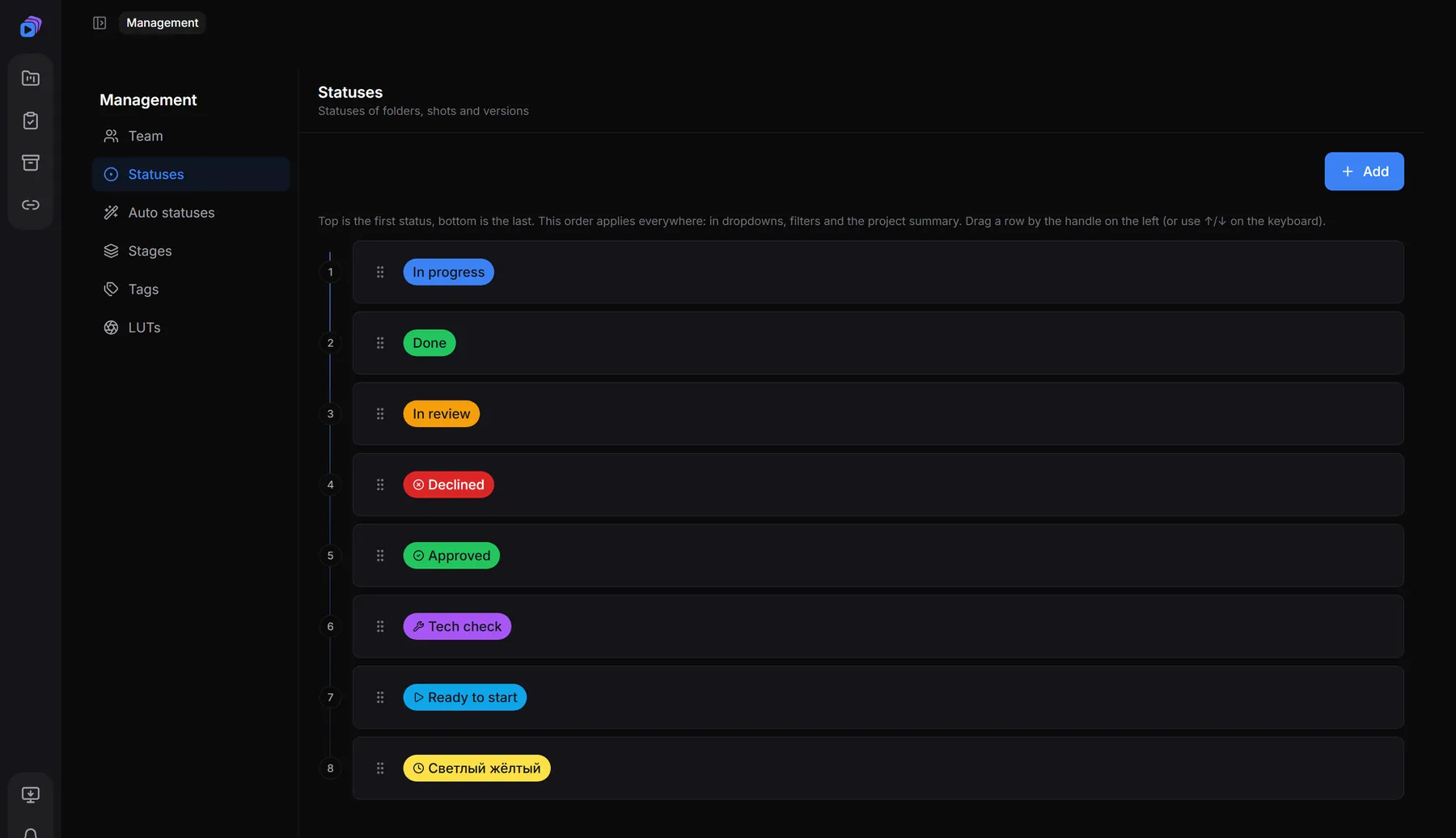
- Status
- Due date
- Artists
- Brief
- Stage
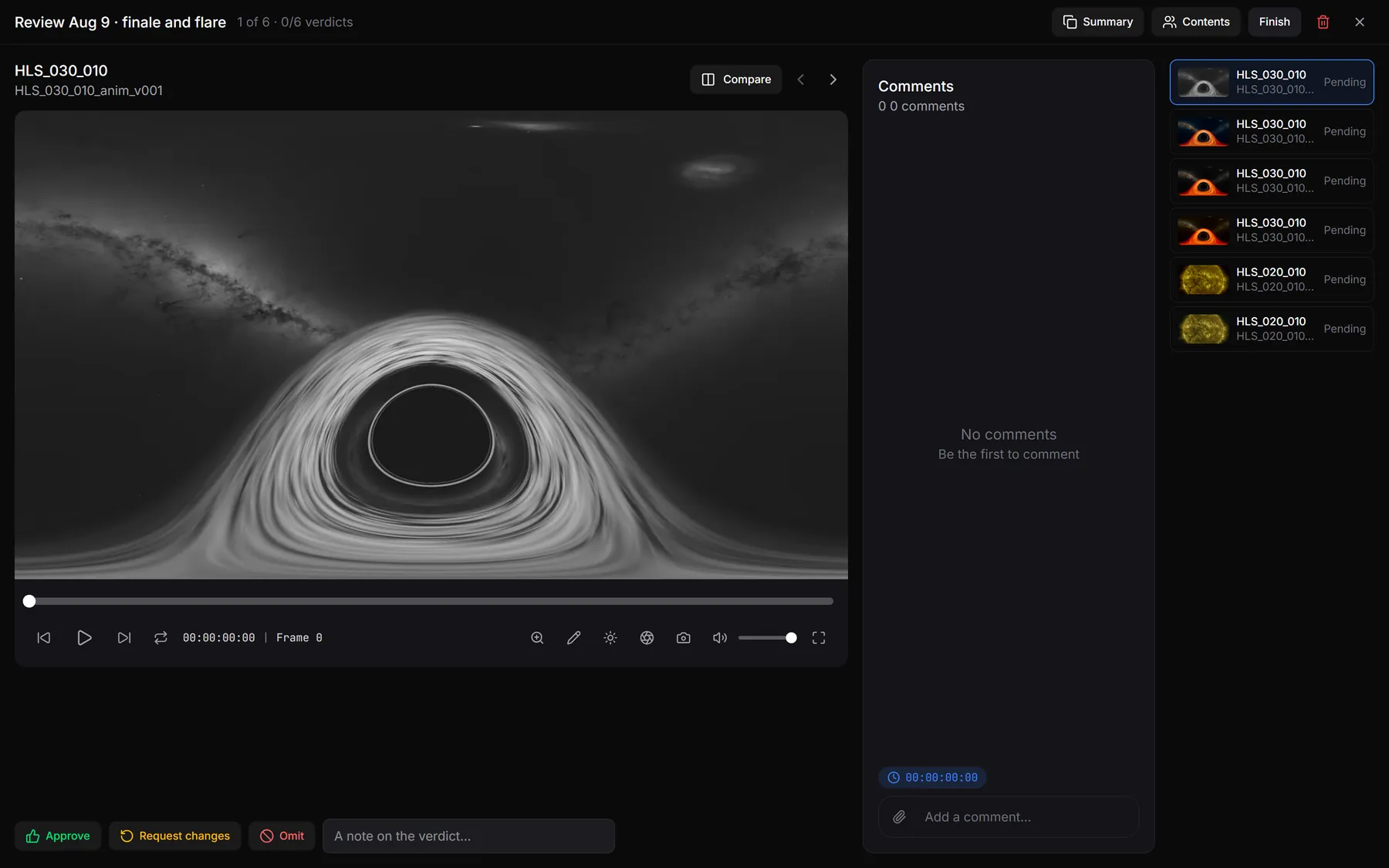
- Verdict
- Proxy and thumbnail
- Drawings on frames
- Owner — everything in their own account
- Internal mini-account — projects they are allowed into, permissions set one by one
- Client mini-account — only the versions assigned to them in a review session
- Guest with a link — one shot, no account, for as long as the link lives
Sequences are optional: a small project lives without them and keeps its shots directly in the project. Everything else — statuses, stages, artists, links, watermarks — are not separate modules but properties of those five entities. Which is why it reads best top-down: first Projects and sequences, then Shots, then Versions and stages.
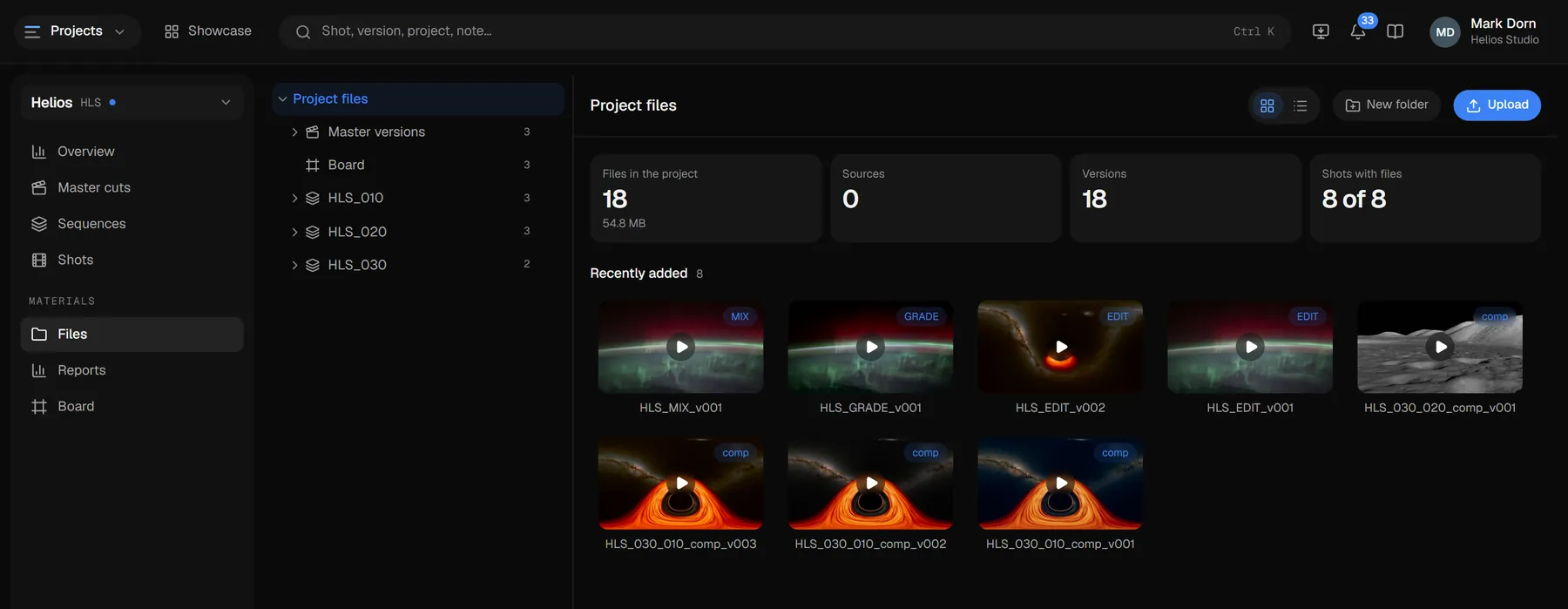
A second, shorter branch grows out of the project — master versions: the edit, the colour pass, the mix, that is, the reels that cover the whole film at once. They live beside the shots rather than inside them, and they are simpler: Project master versions.
In the code and the API the central entity is called Shotman; in the interface it is only ever a shot. Same thing.